
March 17, 2026
Interviewed by Coby Stephenson
Sage Hill Alum Q&A – Diana Davidson
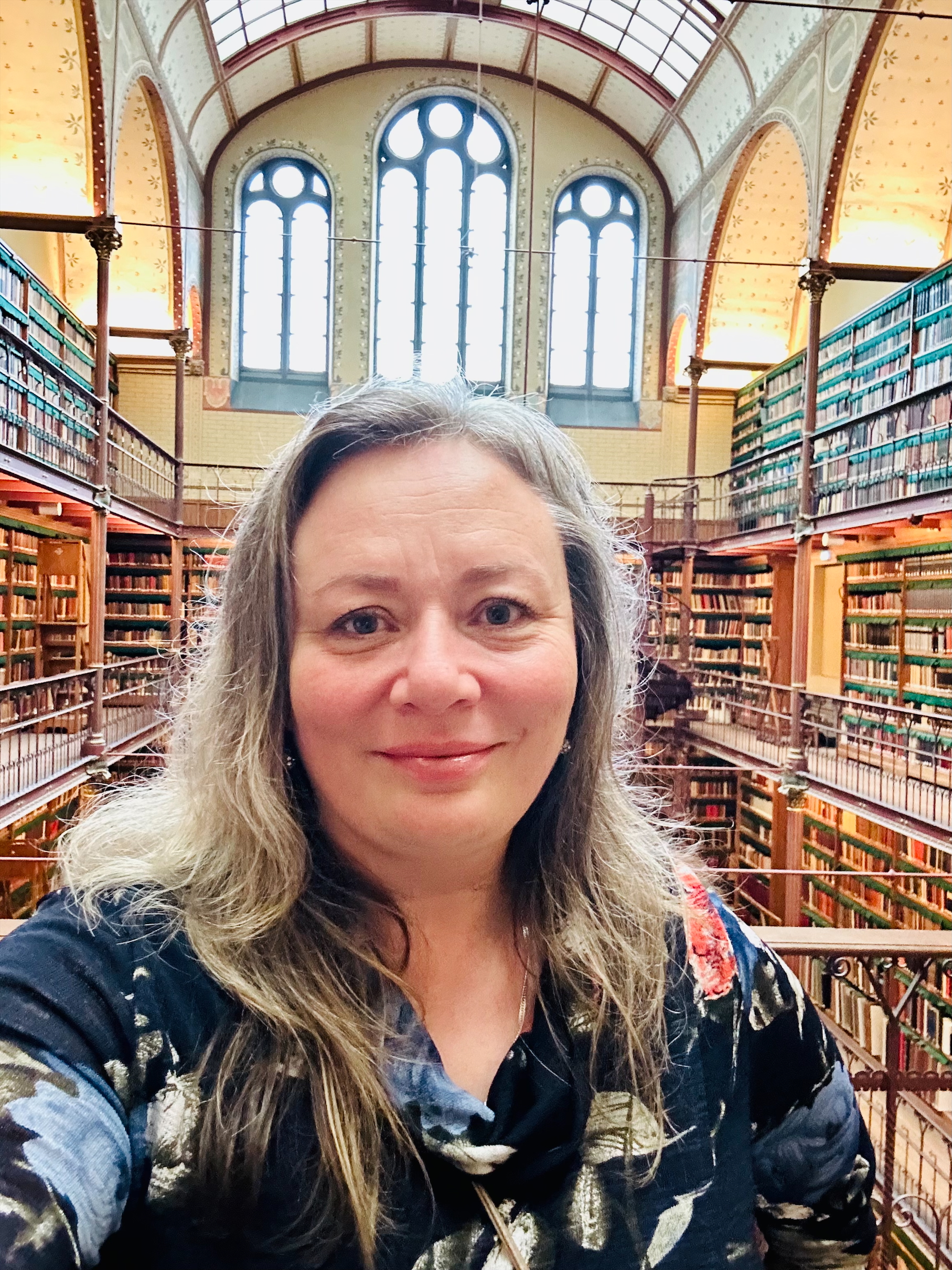
Sage Hill Writing recently caught up with Diana Davidson, alum of Sage Hill Writing’s 2013 Fiction Colloquium facilitated by Lawrence Hill. Her novel, Liberations, is forthcoming with NeWest Press.
What impact did Sage Hill have on your writing process or career?
When I attended Sage Hill in July 2013, I was two months away from my first novel Pilgrimage coming out in the world (published by Brindle & Glass). I had a draft of another manuscript and was churning away on it and brought it to work on at Sage Hill. But I still didn’t feel like a writer.
Sage Hill showed me what a writing community could look like and feel like. Sharing time and space with people who also think that spending 10 summer days on the prairies creating stories was a good thing to do was affirming.
Even though I shelved the manuscript I worked on (I realized my heart wasn’t in that story in the right way), when I went home to Edmonton, I felt like a writer. Sage Hill gave me confidence and community. And I was able to bring that to my readings and book club visits and blogs to promote and share Pilgrimage with readers. Sage Hill was such a gift for me.
What did you like the most about your Sage Hill experience?
Everything. It was incredible to work with Larry and have a writer whose work I admire spend time engaging with my ideas and encouraging me in my craft. Meeting other writers was a highlight of course and has led to incredible friendships. I loved the readings of people’s works-in-progress: both instructors and students would share what they were working on during a few of those long sun-soaked evenings. Maybe it was the space or the generous vulnerability of people sharing unpolished pieces in a room full of other writers, but there was something sacred about those evening gatherings.
Congratulations on your forthcoming novel! Tell us about your book in three words.
Thank you. Three words! This is a brilliant but difficult exercise: love, war, ghosts. I am so excited that my next novel Liberations is forthcoming with NeWest Press in Edmonton. I have just started working with my editor Thomas Wharton, a writer whose work I admire very much, and the whole NeWest team is amazing (Fawnda, Meredith, Christine).
Liberations begins when a Dutch girl meets a Canadian soldier on Liberation Day at the end of World War Two. The novel tells a story of people rebuilding their lives after war and is inspired by real events: my Dutch grandmother met my Canadian grandfather in Amsterdam on May 7, 1945. The book takes place in Amsterdam and in Buffalo Lakes, Alberta (near Grande Prairie). While the book is about the aftermath of WWII, its themes of fighting fascism and seeing Canada as a promise resonate in our current troubling times.
While I hope my novel will have broad appeal, it is a story I am uniquely qualified to tell. And the telling of it, and the sharing of it, is only possible because of the confidence I gained at Sage Hill.
What’s the best writing advice you’ve ever received?
For me, Toni Morrison’s advice “If there is a book you want to read and it does not exist, write it” is wise. Sometimes I write about what I know and sometimes I write about what I want to know and most of the time I write somewhere in between. For me as both a reader and a writer, I connect with a story or a character when I feel empathy: is this person experiencing something I can relate to and see in a new way and, I think, more importantly, is this person experiencing something I can’t relate to but I understand it a bit now because I’ve connected with a character on the page? And perhaps what I experience in a story means that in my life-in-the-world I can have more empathy and more connection with the people I meet.
What advice or tips do you have for people who’ve never attended Sage Hill and are considering applying? What can they do to prepare or how can they make the most out of their time at Sage Hill?
Apply! Invest in your writing. Explore your idea, workshop your manuscript, believe in yourself as a writer. Go to Sage Hill with an open mind. The big wide prairie is a creative space and place. Having time, quiet, and connection to tell your story is a gift you can give yourself.
Even though I attended thirteen years ago, I think about my Sage Hill experience all the time. On my last day at St. Michael’s, a fellow writer gifted me a small bundle of sage that she picked in the nearby fields on the hill. I still have that sage and it has a place on a shelf in my bookcase. It is in a small vase in front of a shelf of books written by authors I met at Sage Hill. When I need to remind myself that I am a writer, and when I need to remind myself that I need to keep writing, I hold that sage and I look at those books and I think of all the wonderful/important Canadian stories out there in the world written by people I was fortunate to work with and become friends with (some just for the time there and some still dear friends).
Any final thoughts?
The world needs more Canadian stories right now. We are living in dark, polarizing, scary times. We need more diverse stories, we need comforting stories, we need stories that challenge us, and stories that remind us. Stories bring connection and stories bring community. And connection and community are what we need to set things right. Sage Hill is a wonderful place to nurture your story so you can share it with readers. If you are thinking about going, go.
Diana Davidson lives and writes in Edmonton, Alberta, Canada in Treaty Six territory and in the homeland of the Métis Nation. Her novel Liberations is forthcoming with NeWest Press: it is a story about a Dutch girl and Canadian soldier who meet on the last day of WWII in Europe as the Canadians liberate The Netherlands from Nazi occupation. Her first novel Pilgrimage (Brindle & Glass, 2013) explored women’s life in Northern Alberta at the turn of the twentieth century. Pilgrimage was a finalist for the 2014 “Alberta Readers’ Choice Award”. Davidson’s creative nonfiction essay “Ahead of the Ice” won the Writers Guild of Alberta Jon Whyte Memorial Essay award and her story “Marilyn and the Bears” was nominated for a Pushcart Prize by The Copperfield Review. Her most recent publication is the story “Waxwings and War Brides” in Consequence Forum 17.1 Spring 2025.
December 3, 2024
Interviewed by Iryn Tushabe
Alumni Q&A with Jasmina Odor
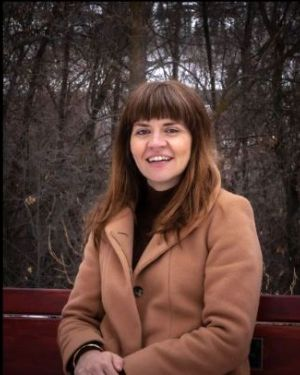
Sage Hill Writing recently caught up with Jasmina Odor, alum of Sage Hill Writing’s 2016 Fiction Workshop facilitated by Alissa York. Jasmina recently published her novel, The Harvesters, through Freehand Books.
Jasmina Odor, photo credit Trisia Eddy
Q: What impact, if any, did Sage Hill have on your writing process or career?
A: The writing conversations I had at Sage Hill deepened my thinking about writing and art. There were poetically charged moments and insights from others that I return to again and again. I kept a journal that means a lot to me now, because it captures some of the enlivening experiences – the workshop gems, the porch conversations at sunset. The workshops, as well as one-on-one conversations with Alissa, moved my novel from a possibility into a reality – they helped me solve problems that had seemed unsolvable and moved the manuscript forward one giant leap. The effect on my career is significant in the sense that I owe this latest novel’s existence partly to Sage Hill, and also in the sense that you make friendships and connections in this kind of workshop that can open doors later. My mentor blurbed my first book, and I will cherish that blurb forever.
Q: What’s the best writing advice you’ve ever received? (Doesn’t have to be from Sage Hill.)
A (not from Sage Hill): You have to get into the s**t of it.
A (from Sage Hill): Veins that don’t lead to the heart bleed out.
Q: Congratulations on your recent publication, The Harvesters! Tell us about your book in three words.
A: Paris, pigeons, reparations.
Q: Is there anything you’d like to add?
A: What I am grateful for as much as the writing accomplishments are the friendships I formed at Sage Hill. It takes a special kind of place to allow people to bond rather than compete, and I think Sage Hill was precisely that kind of warm, safe, beautiful, thoughtfully-run space.
Finally! One time I was jogging in a grassy field near Sage Hill, and I must’ve hit a hole in the ground because I suddenly fell forward, totally flat. But I landed so softly in the grass that I didn’t hurt anything and was shocked by how good I felt, as if I were a kid who threw herself onto a pile of pillows. Afterwards, I thought, Sage Hill is a bit like that – you can trust it to catch you if you fall, enfold you softly, when you’re worried you might get bruised.
Thank you, Jasmina, for your thoughtful and generous words!
May 8, 2024
Written by Iryn Tushabe
Interview with Cassidy McFadzean
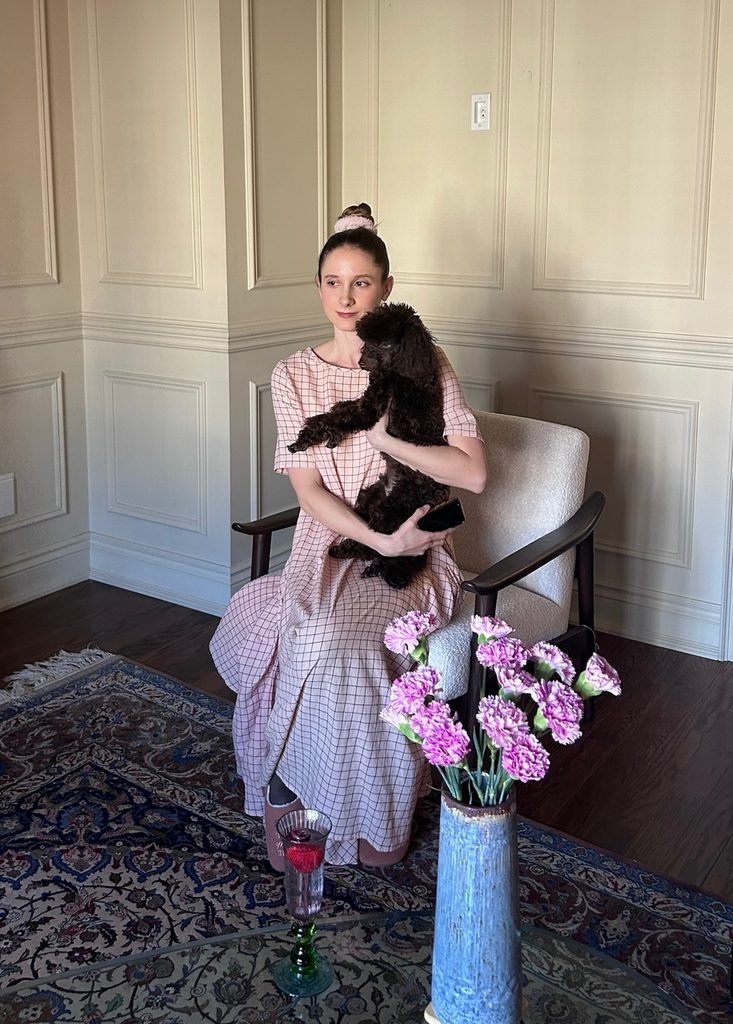
When Cassidy McFadzean first attended Sage Hill in 2009, she’d initially wanted to write fiction. She was yet to see herself as a poet. But Susan Stenson, an instructor in the Emerging Course that year, revealed the burgeoning poet within her.
“Her workshops were fun and playful,” recalls McFadzean, adding that she still uses the Flip Dictionary Stenson shared with the group. “She taught me that anyone curious about language and the world can write poetry.”
Now, fifteen years later, McFadzean is an acclaimed poet with three collections to her name. Drolleries (McClelland & Stewart 2019) was shortlisted for the Raymond Souster Award. Hacker Packer (McClelland & Stewart 2015) won two Saskatchewan Book Awards and was a finalist for the Gerald Lampert Memorial Award. Her latest collection, Crying Dress, is now out from House of Anansi Press. She has also written a crown of sonnets called Third State of Being (Gaspereau 2022).

But McFadzean’s desire to write fiction never abated. Along the way, she has published short stories in various magazines. Victory Day, her short story which won first runner-up in Prism International’s 2019 Jacob Zilber Prize, consequently appeared in the Best Canadian Stories 2020.
She’s currently revising a story due to be published in Dead Writers, an anthology coming out with Invisible Publishing this fall.
Though McFadzean’s most recent time at Sage Hill was in 2012, the fond memories have stayed with her. “I remember sitting around the fire listening to Dave Carpenter tell ghost stories about the old Emma Lake School of Art,” she says. “I’ve also attended a SWG writing retreat at St. Peter’s College—the current home for in-person Sage Hill courses— and would encourage everyone to take some time to focus on their craft and feed the chickadees.”

May 12, 2023
Written by Credence McFadzean
Interview with Madonna Hamel

Once, when Madonna Hamel was a high school student, she was called into her teacher’s office. “I thought she was going to give me hell for a late essay,” Madonna recalls, since this teacher was encouraging to her but also never thought she was reading above her grade level. Instead, she posed a question: “Have you ever given some serious thought to being a writer?”
Photo Credit: James R. Page
Today, Madonna Hamel is a Sask-based writer, journalist and artist who, in the spirit of that teacher’s encouragement, mentors young writers in the Swift Current area. Madonna has taught Sage Hill Youth Workshops for a number of years, and continues to support many of these young writers, at their request, with ongoing meetings outside the original program window. Her students have gone on to publish in local newspapers and the Saskatchewan Writers’ Guild’s Windscript magazine.

Photo Credit: Iryn Tushabe
Madonna has affectionately described her mentor role as “challenging, rewarding, exhausting, like herding cats.” She notes that her responsibility is to help “install work habits to keep them writing,” to allow them to recognize when something works in a piece of writing and when it doesn’t, and to hone “the ears and eyes to catch that.” Beyond the love and excitement that exists for a new idea or work, she tries to cultivate a similar joy for editing, or the “tinkering-burnishing-honing process.”
Shaping her role as mentor for young writers, Madonna has continued to connect with that younger version of herself, remembering “how painful and awkward that time was,” and how difficult it could be to find direction with “all that explosive or temperamental energy.” With the writers she has taught, Madonna has seen these forces channeled wonderfully in “how much they ache to help each other along, how supportive and protective they are of each other’s genius.”

2019 Sage Hill Swift Current Young Writers’ Program Participants
Photo Credit: Iryn Tushabe
Currently, Madonna Hamel is continuing work on an essay called 26 LIONS, about the vividness of dreaming, her novel The Hem of the World, and her weekly column Pop89. Sage Hill would like to thank her and commend her on all the crucial mentorship work she has done for Saskatchewan writers.